Meditation - searching for a still centre
The reason for producing
this page has been in response to many people asking me about methods of finding
'stillness' amidst the chaos of the world in general, times of stress in their
own lives and to assist in their own healing processes.
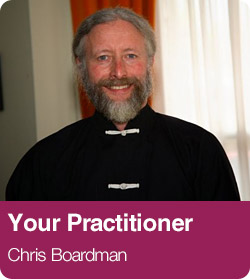
I have practised a variety of meditation techniques over the years from
basic Za-Zen associated with Japanese Martial Arts to Tibetan Meditation learned
at the Samge-Ling Centre in Scotland, home of the venerable Akong Rinpoche,
the Abbot and a leading teacher of Tibetan spiritual culture. I have a strong
Christian commitment which I have broadened through experience of Christian
mysticism, my belief being that God is the power behind all the life force of
the Universe, the universal energy the Chinese call Chi that drives all life.
Meditation is practised on many levels, from a set of mind-calming exercises
to humanity searching for unity with God. I would like to start with the mind
calming exercises and set a principle in motion, which could be expanded, as
you require. The most basic principle of meditation is correct breathing, a
balanced 'in-out' breath being the first step to stillness. The inhalation of
breath and life energy needs to be directed and 'fed' to the energy systems
of the body.
The ancients, particularly in the Orient, discovered that the spine holds
'Energy Vortices' which they called 'Chakras', these 'Chakras' power the energy
circuits of the body including the photon - circulation of the acupuncture meridian
system (recently revealed by Dark-Field Microscope Technology). The most
basic method is simple, but needs to be repeated every day at least once for
5-15 minutes. The 'breath' and 'breathing sequence' are the 'keys' to the technique.
The gentle pattern of breathing once it has become automatic can be 'switched
into' whenever a stressful situation arises to still the nervous system and
calm the release of adrenalin which as we know can turn 'stress' into 'aggression'.
To start with you need to set yourself some space where you can relax
without interruption. Traditionally meditators kneel, their big toes crossed
and sitting back between their heels, however sitting in an upright chair is
fine, as long as your spine is relaxed but straight - this helps the breathing
and also helps to ensure you don't fall asleep! The eyes can be fully or partially
open. There is no need to deliberately attempt to 'empty your mind', that type
of event comes later, for now just do the breathing sequence, gently, with encouragement
not force. Start by breathing in through the nose, 'imagine' and 'direct' the
flow of breath down your front gently allowing the diaphragm and stomach to
relax until the breath 'settles' at Chakra One right in the base of the torso.
Allow the breath to settle for a moment then visualise it going up the spine
through all the remaining Chakras on the 'outgoing' breath - feel the cleansing
effect of the energy flowing up your spine and clearing through your head to
emerge finally through the mouth. Some people, particularly practising in groups,
will use the outgoing breath to make a sound, you are free to exhale as you
wish, though it is better to exhale through the mouth because it empties the
lungs more completely. The whole purpose is to access a stillness, the stiller
you are the greater your capacity to move with purpose when you choose, the
less still you are, the more frantic and uncontrolled your 'self' and your 'life'
become. Stillness and the exploration of inner space have great benefits to
the psyche and the physical body too - directed energy built up from meditation
can help to focus the body's healing and recuperative powers greatly.
|
"Remember right breathing is the key"
| Chakra |
Sanskrit
Name |
Colour |
Location |
Function |
| One |
Muladhara |
Red |
Perineum |
Survival |
| Two |
Svadisthana |
Orange |
Genitals/Womb |
Sexuality |
| Three |
Manipura |
Yellow |
Navel/Solar
Plexus |
Will Power |
| Four |
Anahata |
Green |
Heart |
Love |
| Five |
Visuddha |
Bright Blue |
Throat |
Communication /Creativity |
| Six |
Ajna |
Indigo |
Centre of Head at eye level |
Intuition/Seeing |
| Seven |
Sahasrara |
Violet |
Crown |
Understanding |
The table above describes the position of the seven basic Chakras
as shown in most Indian yoga texts. The development of the technique is
to become aware of these 'Centres' to focus on them and to create a stillness
which may be used to calm stress, to send healing intentions to body parts
that need repair and ultimately to become more tuned to the flow of universal
energy.
|
I would like to conclude with two quotes, one from Hui Neng,
A.D. 637-714:
"In the midst of all good and evil not a thought is aroused in
the    
mind- this is called 'Za'.
Seeing into one's self-nature, not being moved at all, this is
called 'Zen'."
and finally, from the Bible:
"Be still and know that I am God".
|
|
|
|